Break Cue vs Jump Cue vs Jump/Break Cue: What Do You Actually Need?
Share
You can break and jump with your regular playing cue — but you probably shouldn't. A hard break wears out a soft playing tip fast, and jump shots are nearly impossible with a full-weight cue. That's why dedicated break and jump cues exist. The question most players actually have is simpler: do you need a break cue, a jump cue, both, or a single combo that does both jobs? Here's how to decide.
Quick answer: A break cue is heavier with a hard tip for an explosive, controlled break. A jump cue is short and very light for popping the cue ball over blockers. A jump/break combo converts between the two with a removable section — the best value for most recreational and intermediate players. Dedicated cues only pull ahead once you're seriously competitive at one or the other.
Break cue: built for the opening shot
A break cue is engineered to deliver maximum power without destroying your playing cue. Most break cues weigh 18–21 oz — the extra mass produces a more explosive break and a better ball spread. The tip is the bigger difference: break tips are hard leather or phenolic (hard plastic), built to survive repeated high-impact hits and transfer energy efficiently. Using a soft playing tip to break mushrooms and wears it out quickly, which is the main reason to own a separate break cue at all.
Jump cue: built to clear blockers
A jump cue does the opposite job. It's short (40–48") and light (10–14 oz) — roughly half the weight of a break cue. The light, short build lets you accelerate quickly through the cue ball at the steep downward angle a legal jump requires, popping it over an obstructing ball. Many jump cues use a removable butt so you can shorten them further. You won't use a jump cue every rack, but when you're snookered, nothing else legally gets you out.
Jump/break combo: one cue, both jobs
A jump/break combo cue splits the difference with a removable butt section: assembled, it's a heavy break cue; take a section off, and it becomes a light, short jump cue. It's the practical choice for most players because you carry one cue instead of two and cover both specialty shots.
The honest trade-off: a combo's break weight (often ~17–18 oz) is a touch light for the most powerful break, and its jump section is a touch heavy for the most delicate jumps. For casual and intermediate players that compromise is invisible; for a tournament breaker chasing every ounce of power, dedicated cues edge ahead.
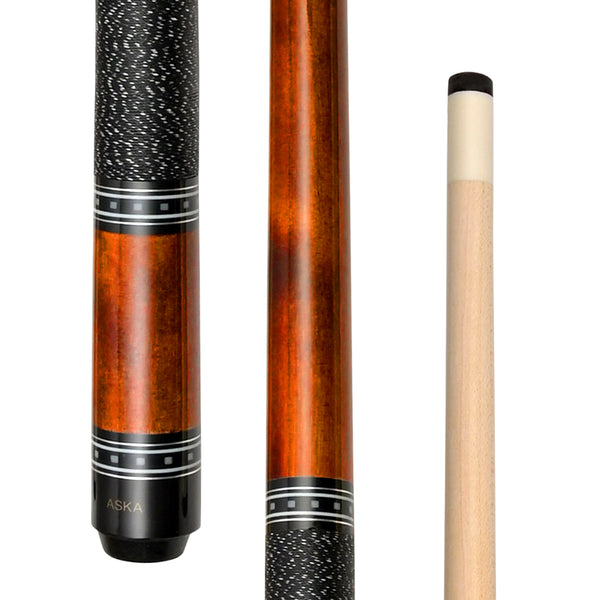
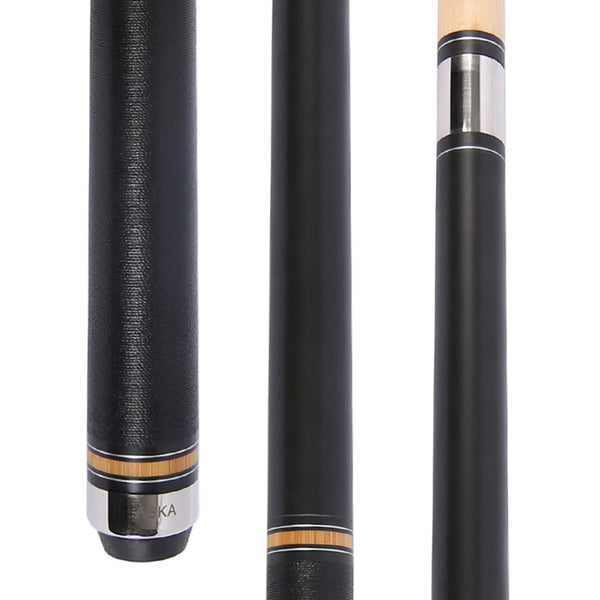
Our ASKA Heavy Hitter and Fireball jump/break cues are built exactly for this role — 3-piece hard rock Canadian maple with a hard tip and phenolic ferrule for explosive breaks, and a removable section for jumps — starting around the price of a single decent cue. See the ASKA Heavy Hitter or the Fireball jump/break.
Side-by-side
| Break Cue | Jump Cue | Jump/Break Combo | |
|---|---|---|---|
| Weight | 18–21 oz | 10–14 oz | Converts (~13–18 oz) |
| Length | 58" | 40–48" | Converts |
| Tip | Hard / phenolic | Hard / phenolic | Hard / phenolic |
| Job | Powerful break | Clear blockers | Both |
| Best for | Serious breakers | Frequent jumpers | Most players & best value |
So what should you buy?
If you're a casual or intermediate player: a jump/break combo is almost always the right call. One cue, both specialty shots, one price — and it protects your playing cue from break wear.
If you're competitive and break often: invest in a dedicated break cue first; the extra weight and consistency matter on every rack. Add a dedicated jump cue only if you jump frequently and want the lightest possible tool.
If you rarely jump: you may only need a break cue. Plenty of players own a playing cue plus a break cue and skip the jump cue entirely.
Whatever you choose, the key upgrade over breaking with your playing cue is the hard tip — that's what saves your good cue and delivers a cleaner hit.
Frequently asked questions
Do I really need a separate break cue?
If you break with your playing cue, the hard impact wears out a soft tip quickly and can loosen the ferrule over time. A break cue with a hard or phenolic tip protects your good cue and breaks more powerfully — so yes, most regular players benefit from one.
Is a jump/break combo cue any good?
For recreational and intermediate players, very — it covers both shots in one cue at great value. Dedicated cues only outperform it noticeably at a serious competitive level.
How heavy should a break cue be?
Most break cues are 18–21 oz. Heavier adds power but can cost control; many players find 19–20 oz a good balance. The right weight is the heaviest you can still swing accurately.
Why are jump cues so short and light?
The short length and ~10–14 oz weight let you get a steep downward angle and accelerate quickly through the cue ball, which is what makes it pop up and over a blocking ball legally.
Can I break and jump with the same cue?
Yes — that's exactly what a jump/break combo is for. It assembles into a break cue and breaks down into a jump cue.
Related guides: New to cue types? See our overview of the different types of pool cues, or read about the classic Sneaky Pete cue style.
Aska Billiards stocks jump/break cues in hard rock Canadian maple, plus playing cues, cases and accessories. Browse jump/break and playing cues and find the right tool for your game.